
How to Choose Between Seoul’s Climate Card, T-money, and K-Pass
Quick Navigation
- 1. Short-Term Tourist Passes (1-Day to 7-Day Passes)
- 2. Standard 30-Day Pass (Long-Term / Expat Option)
- 3. Climate Card vs. T-money Card Seoul
- 4. K-Pass (Cashback Transit Card): Can Foreigners Use It?
Navigating Seoul’s sprawling subway lines and endless bus routes can quickly burn through your travel budget if you are buying single-ride tickets or constantly reloading a standard pay-as-you-go card. If you are wondering is Climate Companion Card available for tourists, the short answer is yes. This Seoul unlimited transit pass — sold in 1-day, 3-day, and up to 7-day increments — is entirely accessible to visitors, provided you know which version to buy and where its geographic boundaries lie. Later on we will also break down Climate Card vs T-money for tourists side by side (the T-money card vs Climate Card Seoul debate every visitor eventually has), since picking the wrong one is the single most common transit mistake foreign visitors make.
Quick note before you dive in: Can foreigners use K-Pass? Not if you are on a 90-day tourist visa — stop researching it now. Without an Alien Registration Card (ARC) and a Korean bank account, you cannot register for it. Your real decision as a visitor comes down to the unlimited Climate Card versus the pay-as-you-go T-money — K-Pass (further down) is only for long-term residents.
Quick Summary
- What it is: Seoul’s unlimited public transit pass covering subways, buses, and public bikes (Ttareungyi).
- For Tourists: Yes, fully available for short-term visitors via specific short-term passes (1 to 7 days) and physical cards.
- Best For: Travelers planning heavy movement across Seoul without buying individual tickets every single time.
The 5-Second Decision Guide
- Visiting Seoul for 3-7 days, staying mostly in the city? Get the Climate Card.
- Traveling beyond Seoul, or need to pay for taxis? Get T-money.
- Living in Korea 6+ months with an ARC? Register for K-Pass instead — skip the other two.
1. Short-Term Tourist Passes (1-Day to 7-Day Passes)
💰 Price: 1-Day 5,000 KRW / 2-Day 8,000 KRW / 3-Day 10,000 KRW / 5-Day 15,000 KRW / 7-Day 20,000 KRW (plus a one-time 3,000 KRW physical card fee)
💳 Payment: Foreign credit/debit cards are now accepted for both purchase and top-ups (no more cash-only hassle) — a roughly 3.7% service fee applies to foreign card transactions, so cash is still slightly cheaper if you have won on hand
🎫 Where to Buy: Seoul Tourism Plaza (Jongno) and the Myeongdong Tourist Information Center, major Seoul Metro station customer service offices (lines 1–8), and convenience stores (CU, GS25, Seven-Eleven)
⏱ Activation: Your validity period starts the moment you top up the pass — don’t recharge it until the day you’re actually ready to start using it
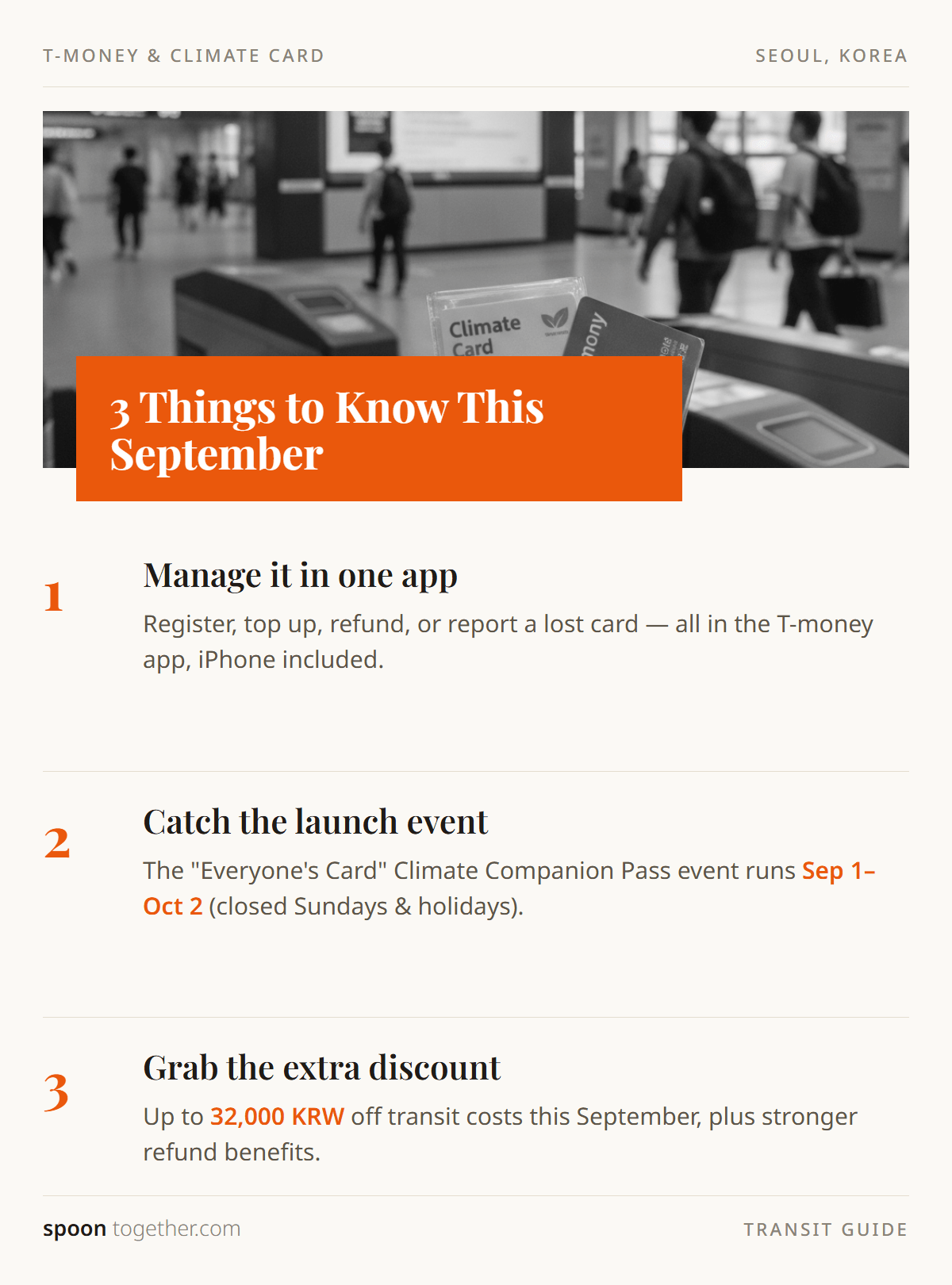
🚇 Coverage: Seoul subways and city buses (excludes Shinbundang Line and out-of-bounds regional extensions)
The short-term tourist pass variant of the Climate Card is specifically designed for international visitors staying in the capital for a few days up to a week. You can purchase a physical card for a small initial fee of 3,000 KRW at major subway station customer service desks or participating convenience stores. Once you have the physical card, you can load your desired duration—ranging from a 1-day pass to a 7-day pass—and enjoy unlimited rides across eligible Seoul public transit networks. It is a fantastic option if you plan on visiting multiple neighborhoods across the city in a single day without worrying about distance-based fares. Keep in mind the physical card itself costs 3,000 KRW upfront, paid in cash, and topping up the pass at most subway station machines still requires cash rather than a credit card. With base metro fares starting around 1,400–1,500 KRW, the 3-day Climate Card (10,000 KRW) pays for itself if you tap through turnstiles at least 3 to 4 times per day.
2. Standard 30-Day Pass (Long-Term / Expat Option)
💰 Price: Around 62,000 KRW to 65,000 KRW (optional bike inclusion)
🎫 Where to Buy: Subway station ticket kiosks or Mobile Tmoney app
🚇 Coverage: Full Seoul municipal subway lines and city buses
For digital nomads, study-abroad students, or long-term travelers staying a month or longer, the standard 30-day pass offers maximum savings. Priced around 62,000 KRW to 65,000 KRW depending on whether you bundle public bicycle (Ttareungyi) access, this tier covers daily commuting across the city. Note for iPhone users: due to NFC restrictions with Apple Wallet in Korea, iOS users must use a physical card instead of relying on the mobile app, which is primarily optimized for Android devices.
3. Climate Card vs. T-money Card Seoul
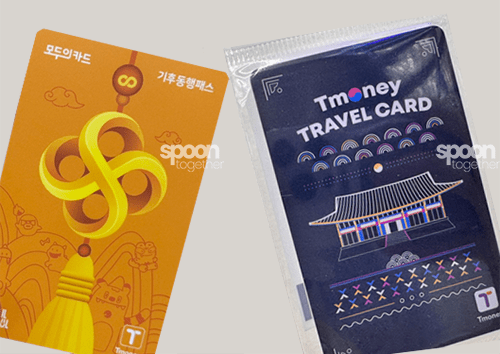
💰 Price: T-money (pay-as-you-go balance) vs. Climate Card (fixed-period flat rate)
🎫 Where to Buy: Subway stations, convenience stores, and ticket kiosks nationwide
🚇 Coverage: T-money (nationwide, including taxis) vs. Climate Card (Seoul only — excludes the Shinbundang Line, AREX Express non-stop trains, and Gyeonggi wide-area buses)
Choosing between a traditional T-money card and the Climate Card depends entirely on your itinerary. A standard T-money card costs 3,000 to 4,000 KRW upfront and works on a pay-as-you-go balance that is accepted nationwide, including intercity travel outside Seoul. In contrast, the Climate Card operates on a flat-rate periodic fee and is heavily optimized strictly within Seoul’s municipal borders. T-money also works to pay for taxi fares, which the Climate Card cannot do. And if your itinerary includes the Shinbundang Line, the non-stop AREX Express to the airport, or a Gyeonggi-area commuter bus, the Climate Card simply will not tap — T-money remains the safer, more flexible choice for anything outside Seoul city buses and the regular subway.
4. K-Pass (Cashback Transit Card): Can Foreigners Use It?
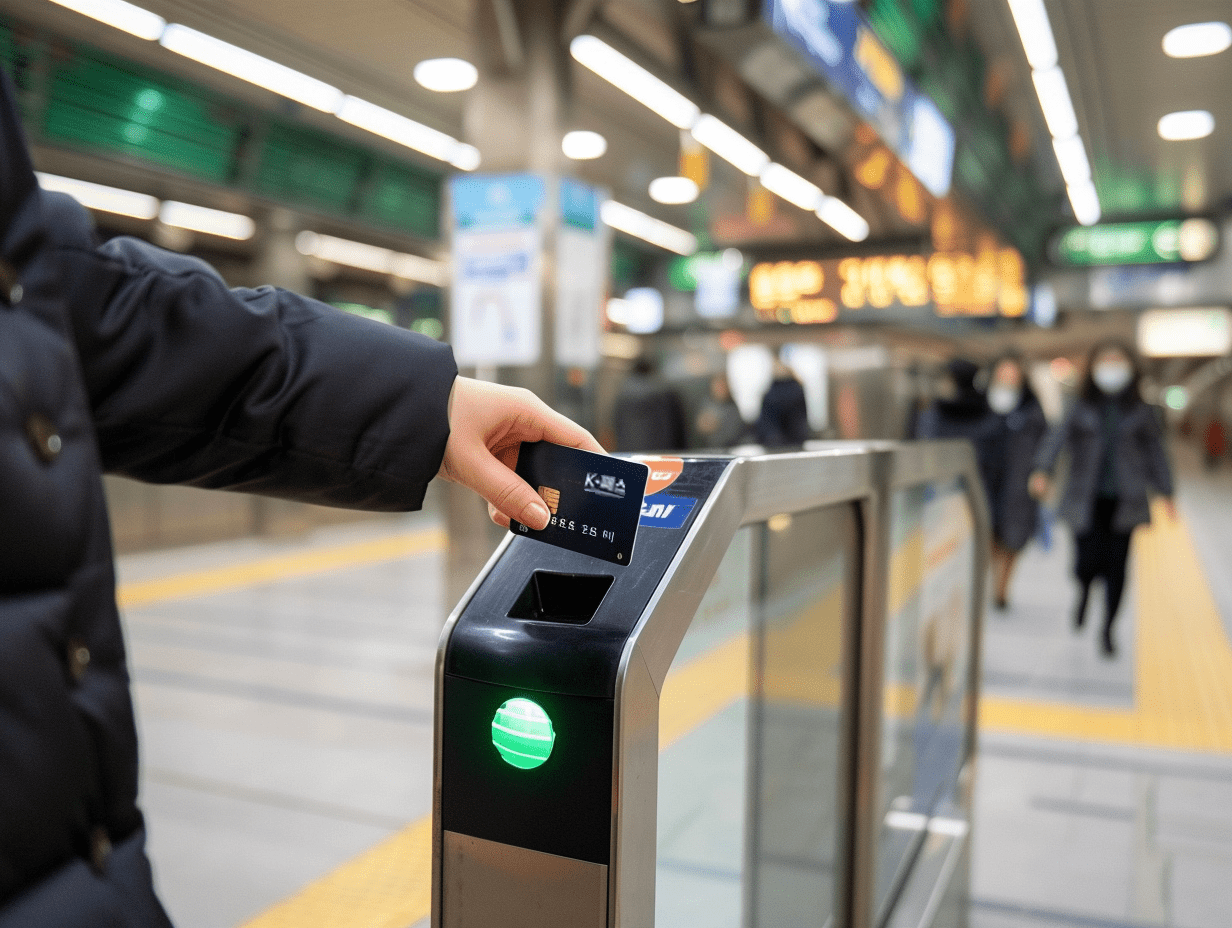
💰 Price: Free card application + monthly cash rebates (20% to 53%)
🎫 Where to Apply: Online via the official K-Pass platform (requires ARC and local phone number)
🚇 Coverage: Nationwide public transit for qualified long-term residents
If you live in Korea long-term, this is where you get your money back.
The application itself is free, offering monthly cash rebates ranging from 20% to 53% depending on your age group and income bracket. Registration happens online through the official K-Pass platform. Crucially, this requires an Alien Registration Card (ARC) and a locally verified mobile phone number registered under your exact name.
Short-term tourists cannot use this. It is strictly built for long-term foreign residents who have lived in the country for over 6 months and clock in 15 or more public transit rides a month.
| Feature | Climate Companion Card | T-money | K-Pass |
|---|---|---|---|
| Best For | Short/Mid-term Seoul Explorers | General Travelers & Nationwide Trips | Long-term Foreign Residents (ARC Holders) |
| Price Range | 5,000 KRW (1D) to 20,000 KRW (7D) | Card: ~4,000 KRW + flexible top-ups | Free card + 20-53% monthly cash rebate |
| Coverage Area | Seoul City limits (Subway/Bus) | Nationwide (Subways, Buses, Taxis) | Nationwide public transit |
| Pros & Cons | Pros: Unlimited rides, zero calculation stress. Cons: Invalid outside Seoul or on express lines. |
Pros: Ultimate versatility, works everywhere. Cons: No discounts or unlimited bundles. |
Pros: Massive cash rebates for regular commuters. Cons: Unavailable to standard tourists. |
Transit cards can feel like a puzzle when you first land, but picking up a physical Climate Card at a subway station customer service desk is a straightforward process. Just remember to tap in and tap out at every single gate, keep your physical card safe if you are using an iPhone, and double-check your map if you find yourself heading toward the outer suburbs. Enjoy exploring the city!
Discover more from spoontogether
Subscribe to get the latest posts sent to your email.

You May Also Like
Navigating Seoul’s Subway System Without Losing Your Won